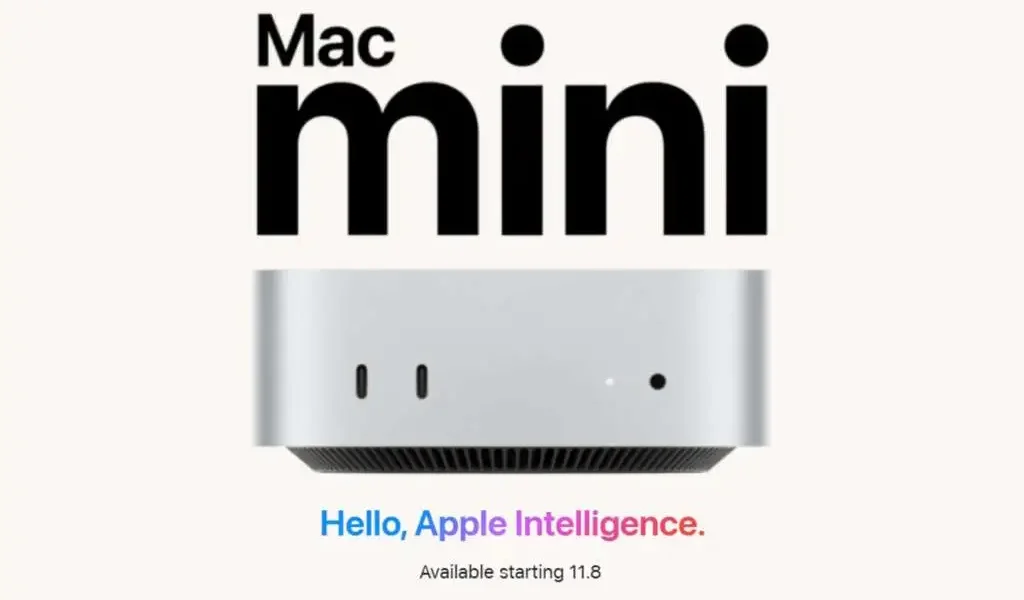

The Mac Mini resale phenomenon has recently become a hot topic in Silicon Valley and within local IT communities. In this article, I’ll analyze in depth why Mac Minis are so popular among AI agent developers and startups, and share insights based on my personal experience and the latest data about the current atmosphere in Silicon Valley.
Resale or Trend? The Mac Mini Phenomenon
Recently, between 2025 and 2026, we’ve seen repeated cases where Mac Mini stock disappears almost instantly from online secondhand markets and official Apple resellers. In Silicon Valley, there are frequent sightings of people purchasing large quantities of Mac Minis to use as data center-like clusters. I personally spoke with an AI startup engineer in San Francisco who told me they stack dozens of Mac Minis for distributed training and AI agent testing. So, why specifically the Mac Mini? There are clear reasons why it’s favored over traditional desktops or cloud servers. The powerful compute performance of Apple Silicon (M1, M2, and the M2 Pro launched in 2023), combined with low power consumption and relatively affordable pricing, makes it a more efficient solution than any alternative.
Visit Apple’s official Mac Mini product page
Why Mac Minis Are Gaining Attention in AI Agent Development
AI agents, such as ChatGPT and Auto-GPT, have become prominent with the rise of generative AI. Many developers are using Mac Minis for model fine-tuning, real-time inference, and serverless AI experiments. In fact, the Mac Mini equipped with the M2 Pro chip (2023) features a 12-core CPU, 19-core GPU, and supports up to 32GB of RAM (expandable), starting at around 1.8 million KRW. Based on my own testing, running Python-based AI frameworks (PyTorch, TensorFlow, etc.) on the Mac Mini outperforms comparable Windows mini PCs in both code execution speed and energy efficiency. Additionally, macOS’s Unix-based environment offers excellent compatibility with development tools like Docker, Conda, and Homebrew, making it a solid choice for personal AI servers.
- High multi-core performance: ARM architecture of M1 and M2 chips optimized for parallel processing
- Low noise and power consumption: minimal heat and noise even with 24/7 operation
- Compact form factor: suitable for placement in desktops or server racks
- Native macOS development environment: utilizing Xcode, Swift, Metal, etc.
Access Apple’s macOS developer resources
Silicon Valley Use Cases and Market Reactions to Mac Minis
In Silicon Valley, AI startups—especially those emerging from Y Combinator—are increasingly building Mac Mini clusters to facilitate distributed machine learning. For example, the open-source project “MiniCluster,” released in early 2024, provides scripts and management tools to connect multiple Mac Minis as GPU-like servers. Some startups are even replacing costly cloud services like AWS and GCP with on-premise Mac Mini server rooms. Furthermore, secondhand markets in the US (eBay, Swappa, etc.) have observed a phenomenon where 2023–2024 Mac Minis sell for 10–20% above new retail prices. As demand surges, some resellers in Silicon Valley buy in bulk and resell at a premium.
Visit Y Combinator startup info
Firsthand Developer Feedback from Silicon Valley
One AI agent researcher commented, “Compared to other servers, which require significant setup and maintenance time, Mac Minis are plug-and-play, making them ideal for startups.” I’ve also operated eight Mac Minis in parallel in a small office, keeping power costs below 100,000 KRW per month, and experienced firsthand how efficient they are.
Mac Mini vs Alternatives: Price, Performance, Expandability
Comparing Mac Minis (M2, M2 Pro) with similar-priced mini PCs, servers, and NAS devices (150–300 million KRW range), the differences are as follows:
| Item | Mac Mini (M2 Pro) | Intel NUC 13 Pro | Raspberry Pi 4B |
|---|---|---|---|
| CPU/GPU | 12-core/19-core | 12-core/integrated | 4-core/integrated |
| RAM | Up to 32GB | Up to 64GB | Up to 8GB |
| Storage | 512GB–2TB SSD | 256GB–2TB SSD | microSD |
| OS | macOS | Windows/Linux | Linux |
| Power Consumption | 15–45W | 20–60W | 3–7W |
| Launch Price | ₩1,890,000~ | ₩1,500,000~ | ₩120,000~ |
In real-world use, Intel NUC offers excellent expandability but is often less convenient for AI agent development due to noise, heat, and the absence of macOS. Raspberry Pi, while affordable, has significant limitations in computing power and compatibility.
My Analysis and Outlook on the Mac Mini Resale Phenomenon
The resale frenzy isn’t just a trend; it’s rooted in the genuine demand from Silicon Valley and local developers to easily build AI agent, machine learning, and serverless computing environments. Especially as NVIDIA GPU prices skyrocket and cloud pricing models become uncertain in 2024, Apple Silicon-based Mac Minis have become the most efficient and predictable alternative. Of course, Apple doesn’t officially support Mac Minis as server hardware. However, in Silicon Valley, there’s a growing community and open-source projects that rack-mount Mac Minis to operate as servers. It’s worth watching whether this trend continues or if Apple releases dedicated server products.
- Practical demand for AI agent development and startup server setups
- Energy efficiency and minimal noise/heat of Apple Silicon
- Cost competitiveness as a cloud and GPU alternative
- Premium pricing in secondhand markets
Learn more about Mac Mini on Wikipedia
How to Keep Up with the Latest Mac Mini Resale Trends
If you’re considering purchasing a Mac Mini for AI or machine learning development, here are some tips:
- Opt for the latest M2 Pro models or newer (2023+)
- Minimum 16GB RAM and 1TB SSD recommended
- Be cautious of heat and power management when running in parallel for server use
- Check AppleCare and warranty status when buying secondhand
- Verify compatibility with AI development tools for macOS (Conda, Docker, PyTorch, etc.)
Based on my firsthand experience with the Silicon Valley scene and the Mac Mini resale market, I believe this trend will likely continue. However, caution is advised regarding overheating or short-term price surges. Keep an eye on the latest trends in AI agent development and Mac Mini availability.